Walkaround Mentalism at Night to Shine in Souderton, PA: “The Magic Happened in Their Hands”
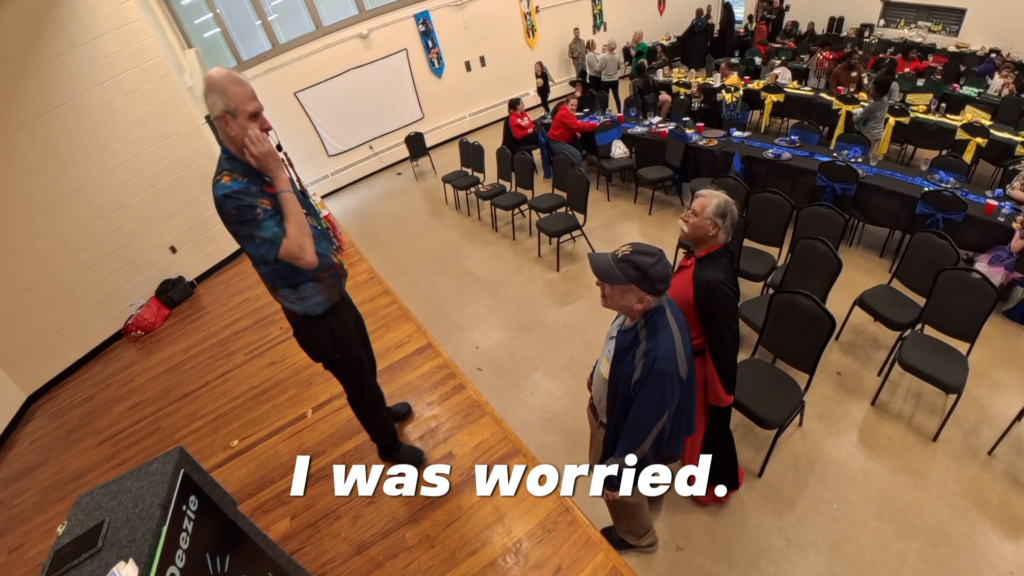
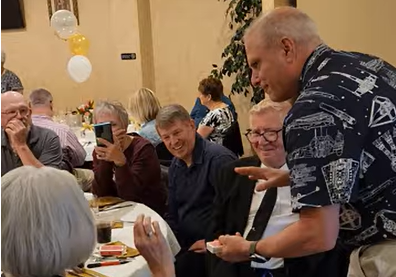
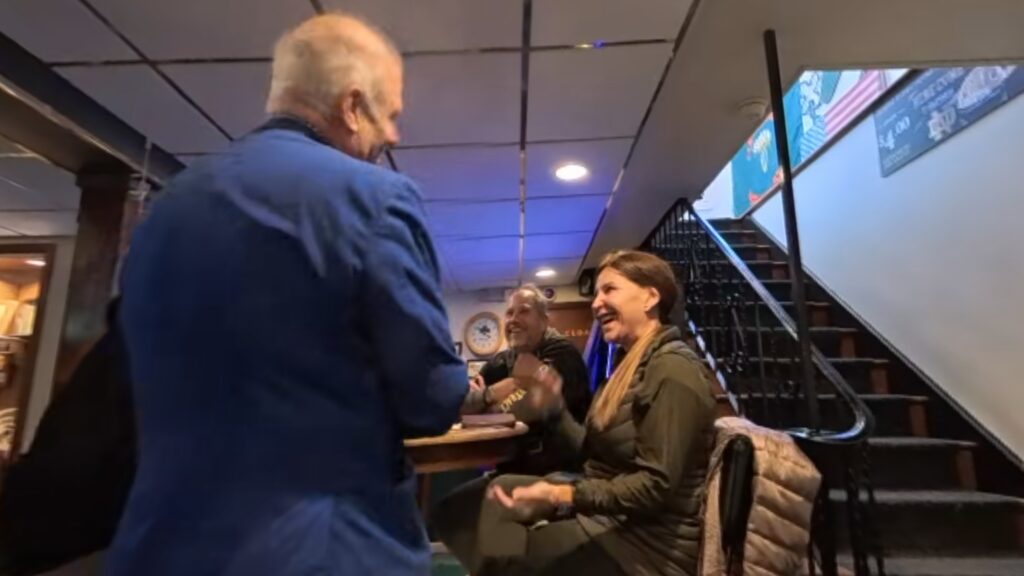
Friday night, February 13, 2026, I had the privilege of performing walkaround mentalism at Night to Shine, hosted at Immanuel Leidy’s Church in Souderton, Pennsylvania. If you have never experienced Night to Shine, the simplest description is this: it is a formal, prom-style celebration created to honor people living with disabilities, built around the idea that every guest should feel celebrated, seen, and genuinely cherished. Night to Shine is part of a worldwide movement supported by the Tim Tebow Foundation and hosted locally by churches on the Friday before Valentine’s Day each year. And while each location puts its own local heart into the night, there are some common “cornerstone” moments that show up again and again: the red carpet welcome, dancing, karaoke, a sensory room option for guests who need a break, and a crowning ceremony that honors every attendee like royalty. That is the big picture. Up close, it is even more powerful. Why walkaround mentalism fits this kind of gala A charity gala or formal event can be loud, fast-moving, and socially demanding, even when it is joyful. Walkaround mentalism is designed for exactly that environment because it is flexible and human-sized. Instead of asking a whole room to focus at once, I move from group to group, meeting people where they are, and shaping the energy to match what they want in that moment. Some groups want big reactions and playful surprises. Others want something gentler, slower, and more personal. With walkaround sets, I can do both in the same night, without the event ever needing to “pause” to make space for entertainment. At Leidy’s, that mattered. The evening had a natural rhythm: arrivals, photos, socializing, dancing, and special moments throughout. Walkaround mentalism slid right into the flow. And in a room full of joy, the goal is never “look at me.” The goal is “look at what just happened to you.” The two effects that absolutely stole the show I performed a variety of material throughout the night, but two effects consistently hit the hardest for these honored guests. 1) A selected card changes color There is something universally satisfying about transformation. A chosen card is already a strong moment because it feels personal. When that chosen card then changes color, it becomes unforgettable, because the story becomes simple enough to retell immediately: “I picked one, and it changed.” That simplicity matters, especially in walkaround performance, because the best reactions are the ones people can share with their friends across the room in a single sentence. 2) Sponge ball magic in their own hands This was the biggest hit. Sponge ball magic is often described as “classic,” but that word undersells it. When the magic happens in someone’s own hands, it stops being a trick and becomes an experience. The transformation and appearances feel impossible in a very specific way: not “I saw it,” but “I felt it.” For many of the guests, that “it happened to me” feeling was the moment that triggered the squeals, the wide eyes, the instant laughter, and the kind of pure shock that looks like a happy reboot of the brain. It is also a beautiful reminder of something Night to Shine does exceptionally well: it creates conditions where people are celebrated through participation, not observation. Mind reading to round out the set To balance the bright, visual moments, I also mixed in mind reading across most sets, the kind that feels like a personalized “how did you know that” moment rather than a complicated puzzle. In walkaround mentalism, mind reading is at its best when it feels conversational and light on procedure. Night to Shine is a night of connection, and mind reading can amplify that when it is framed as shared wonder and playful intuition. In practice, that meant short, clean phases with clear “beats”: A choice is made. A thought is formed. The reveal lands. The guest gets the spotlight. Then I move on, leaving the group with a little pocket of astonishment they can keep passing around. A Souderton, PA community night done right Immanuel Leidy’s Church is located at 273 W Cherry Lane in Souderton, PA, and the facility is built with accessibility in mind, including accessible levels via elevator and designated accessible parking. For an event created specifically to honor people living with disabilities, details like that are not “nice to have.” They are part of what makes the night feel welcoming at the most practical level. But what stood out most was the atmosphere created by the volunteers, caregivers, families, and organizers: the room felt safe, celebratory, and intentionally kind. Night to Shine is designed to be exactly that, an event where honored guests are treated with dignity and joy, with support woven into the experience. As a performer, that kind of environment changes everything. It makes it easier for guests to say yes to wonder. A personal note: I would love to make this an annual tradition There are events that are fun to perform, and events that leave a mark on you. This one did both. I left Friday night grateful, energized, and honestly a little awed by how much light a community can generate when it decides to celebrate people the way they deserve to be celebrated. Night to Shine is built to do that on a global scale, and seeing it lived out locally in Souderton was something special. If you are planning a formal, community-centered event in Souderton, Lansdale, Harleysville, Telford, Perkasie, Doylestown, or anywhere in the Philadelphia suburbs, and you want entertainment that is interactive, flexible, and built around making your guests feel like the stars, walkaround mentalism is a surprisingly strong fit for galas, fundraisers, and inclusive celebrations. And if you were part of this Night to Shine event: thank you for letting me be a small part of a very big night. Phone: 215-948-2658Email: rick@dzmagic.com
Mindreading in Philadelphia: Performing for B2BA and the Small Business Advantage
I recently had the pleasure of performing mentalism for the Business 2 Business Association (B2BA), a networking group founded by local small business owners with a mission that blends business growth and community impact. If you have ever been in a room full of business owners, you know the energy: practical optimism, war stories, big ideas, and the constant question, “How do we stand out in a crowded market?” That is where mindreading entertainment in Philadelphia shines. Not as a novelty, but as a business tool that creates attention, connection, and conversation. Why mentalism works so well for business audiences Mentalism is built for adult groups because it is interactive, personal, and story-driven. It turns a room of polite small talk into shared moments, inside jokes, and “Wait, how did that happen?” conversations that continue long after the event ends. In practical terms, a strong mindreading set does three things for a business crowd: Breaks the social ice fast without forcing awkward networking Creates memorable moments people actually talk about afterward Gives hosts an easy win because guests feel like something special happened Where Philadelphia mindreading entertainment fits best for small businesses B2BA’s community of owners is a great reminder that “business events” come in many forms. Here are high-value places mentalism fits, with ideas you can lift directly into planning. 1) Client appreciation events that feel premium (without feeling corporate) Client appreciation is hard to get right. Too quiet, and it feels like a dinner. Too salesy, and it feels like a pitch. Mentalism threads the needle because it makes clients feel personally seen. A mindreading routine can be structured around audience choices, company values, or even a playful “prediction” tied to the host’s message. Philadelphia examples that work well: Restaurant buyouts and private rooms in Center City Rooftop mixers Small venue gatherings in Old City, Fishtown, or University City 2) Awards dinners and milestone celebrations with built-in spotlight moments Awards dinners need pacing: energy up front, meaningful recognition in the middle, and a strong finish. Mentalism pairs well with awards because it can: Introduce honorees with a customized moment (clean, respectful, and funny) Serve as a “reset” between dinner courses and speeches Close the night with a big impossible reveal that sends people out buzzing 3) Holiday parties that actually feel like a party Holiday parties are often two events in one: leadership wants culture-building, employees want fun. A mindreading show works because it is: Sophisticated enough for executives Playful enough to keep it light Structured enough to avoid the “what do we do now?” dead time 4) Family days and company picnics where adults still want to be entertained Even at family events, the decision-makers are adults. The best approach is a family-friendly tone with an adult-intelligent structure. A good mentalism set can be designed so: Kids enjoy the surprises Adults enjoy the “how is this possible?” layer Everyone shares the moment together 5) Trade shows, expos, and booth traffic at fairs and community days If you have ever paid for a booth, you know the brutal truth: you are competing with food trucks, music, giveaways, and 50 other tents. Mindreading at a booth is not background entertainment. It is a crowd-building engine. Tactics that work: Micro-sets: 2 to 4 minutes per group, repeated all day A visible “challenge” hook: a sign like “Try to fool the mindreader” A simple lead-capture bridge: “Want to see the second phase? Drop a card and come back at 2:00.” A sponsor-friendly script that naturally mentions the business once, then lets the amazement do the selling This is especially effective in the Philadelphia metro where community festivals and neighborhood events are dense and competitive. 6) Community sponsorships that buy goodwill and attention at the same time One idea that came up in conversations around B2BA’s community orientation is a smart sponsorship model: sponsor a public-facing show that feels like a gift to the neighborhood. Options small businesses can sponsor: Library programs Community center nights School fundraiser events Nonprofit galas and donor receptions It is often less expensive than a large ad buy, and the goodwill is real because people remember experiences more than logos. Additional high-ROI ideas small businesses overlook Here are more ways Philadelphia mindreading entertainment can support growth, beyond the usual party categories: Grand openings and ribbon cuttings: keep crowds engaged while people cycle in and out Customer advisory boards: open with mentalism to shift the room from skeptical to curious Sales kickoffs: use a prediction reveal to reinforce the theme for the year Recruiting events: attract talent with something that signals “this company invests in culture” Workshops and lunch-and-learns: a short mindreading segment can frame a talk on communication, decision-making, or influence Partner events: two complementary businesses co-host a night and split the cost while doubling reach Content capture: record audience reactions (with permission) for social proof that feels authentic, not ad-like A B2BA takeaway: relationships are the product B2BA explicitly emphasizes relationship-building as the core of networking, with a local membership base and an ongoing calendar of meetings and events. That is the real alignment with mentalism. In business, people rarely remember the exact words you said. They remember how an experience made them feel, and who they shared it with. A strong mindreading experience makes that feeling happen on purpose. If you are planning a client event, an awards dinner, or a booth presence anywhere in Philadelphia, mentalism is one of the cleanest ways to turn attention into conversation, and conversation into relationships.
Philadelphia Wedding Cocktail Hour Entertainment: Why Mentalism Is the Secret Weapon
When couples search for entertainment for wedding celebrations in the Philadelphia area, they usually start with the big moments: the ceremony, the first dance, the reception entrance. But the part of the day that often has the most “dead air” is cocktail hour. That is exactly why cocktail-hour mentalism has become one of my favorite options for weddings across Philadelphia, Montgomery County, and Bucks County. It turns that waiting window into a highlight, creates instant connection between guests, and keeps the energy up while the schedule stays on track. If you are comparing wedding entertainers and want something that feels classy, modern, and genuinely interactive, here is why mentalism during cocktail hour works so well. What is cocktail-hour mentalism? Mentalism is an interactive, close-up style of entertainment built around perception, psychology, and impossibility. During cocktail hour, I perform in small groups as guests mingle, usually in short sets that run 3 to 5 minutes. No stage. No microphones. No special lighting. And no tables needed. The experience feels natural, conversational, and elevated. The goal is not to “catch” anyone. The goal is to create shared astonishment and the kind of laughter that helps guests feel like the celebration has already started. Why cocktail hour is the best time for wedding entertainment Cocktail hour is a rare sweet spot. Guests are in one place, spirits are high, and people are meeting for the first time. It is also when the couple is often away for photos, the wedding party is in transition, and the venue team is flipping spaces behind the scenes. Adding the right entertainment for wedding cocktail hour solves several problems at once. 1) It breaks the ice instantly Weddings often mix friend groups: college friends, work friends, family, plus ones. Mentalism makes strangers feel like a team in under a minute. People laugh together, compare reactions, and suddenly the room feels connected. 2) It keeps guests engaged while the timeline stays smooth Cocktail hour can run long for reasons nobody can control: photo timing, transportation delays, room turnovers. Great entertainment keeps guests happy during those transitions and helps the day feel effortless, even when the logistics are complex. 3) It fits upscale Philadelphia-area venues Whether you are hosting in Center City, on the Main Line, or at a Bucks County barn venue, close-up mentalism blends in. It is designed to be elegant and guest-friendly, not loud and not distracting. Many couples tell me it feels like the perfect match for cocktail hour because it adds energy without demanding attention from the whole room at once. 4) It requires almost no setup A common question from couples and planners is, “Do you need a table or a performance area?” For cocktail hour, the answer is simple: not usually. I move through the crowd and adapt to the space, indoors or outdoors, standing or walking, tight corners or open rooms. That flexibility is a big reason cocktail-hour mentalism works so well as wedding entertainment in Philadelphia and the surrounding suburbs. 5) It creates the stories guests repeat all night The best wedding entertainment is not just what guests watch. It is what they talk about after. Mentalism produces those “Wait, how did that happen?” moments that guests share at dinner, on the dance floor, and the next morning at brunch. It becomes part of the wedding’s social glue. How cocktail-hour mentalism typically works Most cocktail-hour coverage looks like this: I arrive early, coordinate with your planner or venue manager, and get a quick read on the flow. As cocktail hour begins, I start with the groups that form naturally near bars, appetizer stations, and entry points. I rotate through guests efficiently, keeping interactions short, high-impact, and respectful of conversation. If you want it, I can include one or two special moments for VIPs (parents, wedding party, or the couple if timing allows). If you are planning a wedding in the Philadelphia region, this approach gives you a lot of entertainment value without adding complexity to the schedule. Choosing wedding entertainers in Philadelphia: what to look for When you are evaluating wedding entertainers, especially for cocktail hour, look for three things: A clean, guest-friendly style that works for all ages and personalities Experience with real wedding timelines and working alongside planners, photographers, and venue staff A format that scales from intimate weddings to larger guest counts without feeling repetitive Cocktail-hour mentalism checks those boxes because it is modular, flexible, and designed for mingling. Wedding entertainment in Philadelphia, Montgomery County, and Bucks County I perform cocktail-hour mentalism and close-up magic for weddings throughout Philadelphia and the surrounding suburbs, including Montgomery County and Bucks County. If you are looking for entertainment for wedding celebrations that feels polished, interactive, and easy to integrate, cocktail hour is the ideal place to start. If you would like, I can recommend a simple coverage approach based on your venue layout, guest count, and timeline. Rick DeezieWedding mentalism and close-up entertainmentrickdeezie.com
Oz Pearlman and the Confidence Ladder: How Mindreading Builds Belief One Rung at a Time
One of the most overlooked skills in Oz Pearlman style mentalism is not the reveal. It is the pacing. A strong mindreading routine rarely starts with an impossibility. It starts with credibility, built in small, digestible steps that feel natural in conversation. By the time the impossible moment arrives, the audience has already climbed a ladder of smaller moments that quietly establish, “This person is consistently right.” That belief momentum is the real engine. The confidence ladder in plain English Think of a mentalism performance like a product experience. Nobody trusts the “big feature” until the basics work. The confidence ladder is the same idea applied to astonishment. You create a sequence where each rung feels reasonable, then you keep going until “reasonable” runs out. Here is what those rungs often look like in the real world. Rung 1: Social calibration Before anything “mindreading” happens, the performer gets the room comfortable. This is not filler. It is data. How people speak, how they volunteer, how bold they are, how quickly they laugh, who leads the group. It also sets the tone: playful, respectful, and conversational. In Philadelphia, this step matters more than most performers realize. A Center City crowd can be warm, but they can also be quick to judge anything that feels rehearsed or salesy. The best approach is simple: be present, be human, and let the confidence come from clarity, not hype. Rung 2: Small hits that feel fair Next come the first “accurate” moments, usually things that feel possible: a choice that is narrowed down cleanly a description that feels surprisingly specific a quick call that lands a little too often to be luck These moments are rarely the climax, but they are sticky. The audience starts to shift from “this is random” to “this is controlled.” The key is that they feel fair. Fairness is the currency of mindreading. Rung 3: Repetition without monotony This is where belief momentum builds. A single hit can be luck. Two hits can be a coincidence. Three hits triggers pattern recognition, and the brain starts building a model: “He can do this.” That model is powerful because it becomes self reinforcing. Once the audience expects accuracy, they interpret the experience through that lens. They watch more closely, yet they also start accepting the premise. In the suburbs, I see this play out constantly. In Montgomery County, people love the cleverness of the structure. In Bucks County, the fun is in the social energy of the group reacting together. On the Main Line, the preference is often for elegance and restraint, which is perfect for this approach because the ladder can be climbed quietly. Rung 4: The first impossibility Only after the ladder is established do you step into something that should not be possible. This is where people start to look at each other instead of looking at the performer. That social verification is a huge part of why mentalism feels real. The room becomes a network of witnesses. And importantly, it does not feel like the performer “won.” It feels like the room experienced something together. Rung 5: The closer that rewrites the earlier moments The best closers do something sneaky: they change how the earlier rungs feel in hindsight. A strong final reveal makes the audience revisit the first moments and think, “Wait, if that last thing was true, what else did we miss earlier?” That is the kind of ending people talk about on the drive home, or the next morning at work. Why this plays so well outside a theater A Pearlman style approach shines in real social environments because the ladder is built from normal interactions. At a cocktail hour, a holiday party, a dinner, or a client event, nobody wants to stop the night for a formal show unless the room is already ready for it. The confidence ladder is how you earn the room’s attention without demanding it. You are not asking for silence and spotlight. You are creating a series of moments that people naturally gather around. That is exactly why I love performing mindreading style entertainment across Philadelphia and the surrounding suburbs. It is not about grand staging. It is about a clean, interactive experience that works in real rooms with real people. The takeaway When mindreading feels real, it is often because the audience’s belief was engineered step by step. Not with wild claims, not with big props, and not by trying to “prove” anything. Just a well designed sequence that makes the impossible feel like the next logical rung. And once you notice the confidence ladder, you will see it everywhere. In negotiations, in presentations, in product demos, and in the way great leaders build trust before they ask a team to make a leap. That is the part I find most interesting about Oz Pearlman’s style. The method is not just what happens. The method is how belief is built.
The Ethics of Mentalism: Truth, Illusion, and Responsibility
Every art form carries responsibility. For painters, it is the message behind the image. For filmmakers, it is the story they choose to tell. For mentalists, it is something even more delicate: the balance between truth and illusion. When a mentalist appears to read minds, audiences are left wondering how much of what they saw was real. Some performers lean into the idea of psychic power. Others, like Oz Pearlman, are clear that their skills come from psychology and observation. Both approaches raise the same question: how honest should a performer be about what is happening? As someone who performs throughout Philadelphia, Montgomery County, and Bucks County, I have learned that ethics in mentalism are not just about what you reveal. They are about how you make people feel. The Beautiful Lie Mentalism is built on controlled deception. The performer invites the audience into a world where impossible things seem to happen. Everyone understands, at least on some level, that it is an illusion. Yet in the moment, the boundary between truth and fantasy blurs. That tension is what creates wonder. It allows people to suspend disbelief and experience something extraordinary. The question, then, is not whether deception exists. It is whether that deception is respectful. When I perform, I never claim supernatural powers. I use psychology, suggestion, and storytelling to create the appearance of something more. The goal is not to convince anyone of a false reality. It is to celebrate how powerful the human mind can be when we use it creatively. Honesty and the Suspension of Disbelief In traditional theater, audiences know that the story is fiction. Yet they allow themselves to feel genuine emotion. Mentalism is no different. The audience enters with curiosity and gives permission to be amazed. The ethical challenge arises when that boundary becomes unclear. If a performer allows the illusion to cross into personal belief, claiming to speak to spirits or predict the future, it can exploit emotion rather than inspire it. That is why responsible mentalists draw a line. The experience should invite wonder without taking advantage of trust. The art works best when the audience feels both astonished and respected. The Power of Influence Mentalists understand influence better than most people. We use it to guide decisions, create surprise, and build connection. But influence carries risk. It must be used with empathy. In everyday life, influence is everywhere: in leadership, marketing, and personal relationships. The ethical performer reminds us that persuasion can be powerful, but it should always uplift, never manipulate. That principle extends beyond the stage. Whether you are leading a team or giving a presentation, ethical influence means respecting others’ autonomy while helping them see new possibilities. When Truth Becomes More Powerful Than Illusion Some of my favorite moments in performance come when I reveal the truth behind a trick. A quick explanation, a shared secret, or a candid reflection can turn astonishment into insight. People realize that what felt impossible was actually a triumph of perception and psychology. That revelation does not ruin the magic. It deepens it. It shows that the most extraordinary effects come not from hidden forces, but from human creativity. By letting audiences glimpse the real mechanics of wonder, a performer builds trust that lasts long after the show ends. Responsibility Beyond the Stage Performing for corporate groups and community audiences throughout Philadelphia, Montgomery County, and Bucks County has taught me that every act of performance is also an act of communication. Mentalists shape how people think about reality and influence. That power demands care. Our goal should always be to leave audiences not just amazed, but empowered, thinking more deeply about attention, intuition, and the stories we tell ourselves. Magic and mentalism are mirrors. They reflect how easily our perceptions can be shaped. With that understanding comes a shared responsibility to use wonder for connection, not control. Final Thoughts The ethics of mentalism are not about avoiding illusion. They are about honoring the audience’s intelligence and emotional trust. As performers, we create experiences that live in the space between reality and imagination. The challenge is to make that space a place of joy, curiosity, and respect. The greatest compliment a mentalist can receive is not “You fooled me.” It is “You made me think.” To explore more about the art and psychology behind ethical performance, visit rickdeezie.com. My programs invite audiences across Philadelphia, Montgomery County, and Bucks County to experience wonder with meaning and to discover how truth itself can be the most powerful illusion of all.
Performance Psychology: How Confidence Creates Connection
In mentalism, confidence is not just presentation. It’s part of the illusion itself. When a mentalist steps onto the stage, the audience reads every detail — posture, tone, timing, and expression. The performer’s confidence becomes the audience’s belief. Even when something unexpected happens, that calm assurance holds the entire illusion together. The recent 60 Minutes profile of Oz Pearlman gave a perfect example. At one point, a trick failed. His prediction didn’t match. Yet instead of embarrassment or panic, Pearlman smiled, acknowledged the moment, and turned it into laughter. Within seconds, the audience was back with him. That’s the essence of performance psychology: confidence as connection. Confidence Is Contagious A performer’s confidence does more than project authority — it shapes the audience’s reality. In both entertainment and business, people tend to mirror the emotional state of the person leading the room. A calm, confident speaker makes others feel secure. A nervous one spreads uncertainty. Mentalists use this principle constantly. We may not know exactly how a moment will unfold, but by acting as if we do, the audience follows our lead. The same principle applies to leadership, negotiation, and public speaking. People don’t just believe in what you say. They believe in how you say it. The Illusion of Control Every live show contains risk. Props fail. Volunteers freeze. The unexpected happens. But the secret to great performance is not eliminating risk — it’s mastering recovery. A mentalist learns to treat mistakes as opportunities for connection. When something goes wrong, humor and humility can draw the audience closer. The performer becomes human, not superhuman, and that honesty strengthens trust. In that sense, control is an illusion. True mastery is not about predicting every outcome. It’s about staying fully present in the moment and adapting with grace. Building Presence Confidence is not arrogance. It comes from preparation and purpose. Before every performance, I take a moment to center myself — to remember that the goal is not to impress, but to engage. The same mindset applies in business meetings, presentations, or interviews. To build your own sense of presence: Breathe slowly. Calm your body before you speak. Make eye contact. Real connection begins with acknowledgment. Pause with intention. Silence commands more attention than speed. Visualize success. Picture the outcome you want before stepping forward. These are small rituals, but together they anchor confidence and help you stay composed when pressure rises. The Psychology Behind the Magic Mentalism succeeds because of one simple truth: people want to believe. When you project certainty, they follow your lead. That’s why confidence is not a performance trick — it’s a psychological invitation. It tells your audience, “You’re safe to come with me on this journey.” Whether that journey is a magic show, a sales pitch, or a company town hall, the dynamic is the same. The more you believe in your message, the more others will believe in you. Lessons from the Stage When I perform throughout Philadelphia, Montgomery County, and Bucks County, I often remind audiences that mentalism is not about perfection. It’s about presence. The same principle applies in leadership and life. We all face moments when things don’t go as planned. What matters is how we respond. A missed cue can become a moment of laughter. A wrong prediction can lead to a deeper message. Confidence is not knowing you’ll succeed. It’s knowing you can recover if you don’t. Final Thoughts Performance psychology teaches us that confidence is not the absence of fear, but the mastery of focus. It allows a performer — or a leader — to turn uncertainty into connection. When you can stand calmly in front of others and guide them through surprise or doubt, you create the most powerful illusion of all: trust. To experience how these ideas come to life through live mentalism and psychology-based entertainment, visit rickdeezie.com. My programs explore how awareness, empathy, and confidence combine to create genuine wonder for audiences across Philadelphia, Montgomery County, and Bucks County.
The Power of Observation: Thinking Like a Mentalist
Most people move through the world half-blind. We see without noticing, hear without listening, and miss the details that reveal the truth behind a person’s words. For a mentalist, those details are everything. In the recent 60 Minutes feature on Oz Pearlman, we saw what happens when someone trains the mind to notice what others overlook. Pearlman doesn’t claim psychic powers. Instead, he relies on the extraordinary potential of ordinary senses. As someone who performs mentalism for corporate and private audiences throughout Philadelphia, Montgomery County, and Bucks County, I’ve learned that this same skill — the ability to observe deeply — can be developed by anyone. It’s not about mind-reading. It’s about people-reading. Seeing More Than You Look At Observation begins with attention. The average person’s mind wanders almost half the time. A mentalist learns to focus completely on the person in front of them. We study: Micro-expressions: Fleeting changes in facial muscles that reveal true emotion. Body language: Posture, gestures, and the subtle shifts that betray confidence or hesitation. Eye movement and breathing: Small clues about stress, memory, or decision-making. You don’t need to be on stage to use these skills. Whether in a meeting, an interview, or a negotiation, the ability to notice the details others miss can change the outcome entirely. A mentalist uses these signals to tell a story that feels impossible. A leader uses them to understand and connect. Listening Between the Words Observation isn’t just visual. It’s also about sound — tone, pace, and silence. When someone says “I’m fine,” a mentalist hears how they said it. Was the tone tight? Was there a pause before the word? Did the pitch rise or fall? Each clue adds to the picture. The most powerful observers know that communication is layered. Words are the surface. Emotion and truth live underneath. The Mentalist’s Toolkit for Everyday Life You can start thinking like a mentalist with simple habits: Slow down your reactions. Give yourself a second to watch before you respond. Focus on one sense at a time. Try listening deeply to a person’s tone without worrying about what to say next. Notice change. The shift in posture, the flicker of surprise — these are the real tells. Ask neutral questions. People reveal more when they feel unjudged. Practicing observation is like learning a musical instrument. At first it feels mechanical. Then it becomes instinct. Eventually, you start to see patterns everywhere. Observation and Empathy The most surprising discovery is that heightened observation doesn’t make you manipulative. It makes you empathetic. When you truly pay attention, you start to understand what others need. You see hesitation before it becomes frustration. You sense enthusiasm before it becomes a decision. That’s why so many business leaders, teachers, and negotiators could benefit from thinking like a mentalist. Observation is not a trick. It’s the foundation of trust. The Magic of Everyday Awareness During my shows, audiences often ask if I can really “read minds.” I always tell them that the real magic is in learning to notice. Every raised eyebrow, every pause, every nervous laugh tells a story. When you start to listen and look deeply, the world becomes far more interesting — and the people in it, far more understandable. That’s what I love most about mentalism. It reminds us that wonder isn’t limited to the stage. It’s present in every conversation, waiting to be discovered. Final Thoughts The power of observation isn’t reserved for magicians and mentalists. It’s available to anyone willing to pay attention. If you’d like to explore how these skills can transform communication, teamwork, and creativity, visit rickdeezie.com to learn more about my programs and live events in Philadelphia, Montgomery County, and Bucks County. Seeing more begins with simply deciding to look.
Oz Pearlman on 60 Minutes: Reading Minds or Reading People?
When 60 Minutes profiled mentalist Oz Pearlman, the segment opened an important conversation about what it truly means to “read minds.” Pearlman insists his act is built on a lie — the lie that he can actually read someone’s thoughts. What he does instead, he explains, is read people. As a professional mentalist who performs for corporate and private audiences throughout Philadelphia, Montgomery County, and Bucks County, I found that distinction fascinating. It raises deep questions about truth, perception, and the very nature of performance itself. Mind-Reading vs. People-Reading Pearlman’s refusal to claim supernatural powers makes his work, in many ways, even more impressive. The idea of genuine telepathy may seem miraculous, but what Pearlman demonstrates is a mastery of something real and profoundly human — the ability to observe, interpret, and influence others. He can predict a number someone is thinking of or reveal a hidden childhood memory, not because of psychic power, but because of psychological insight and deep intuition. These abilities are honed through years of experience reading facial expressions, micro-movements, tone, and word choice. Still, the ethical question lingers. When an audience gasps and whispers, “He read my mind,” is it dishonest to let that impression stand? My own perspective aligns with Pearlman’s. The art of mentalism is built on suggestion and storytelling. The deception is part of the experience, but the purpose is not to fool — it’s to provoke curiosity about the mind’s potential. When I perform, I often tell audiences that my goal is not to convince them that I possess supernatural abilities, but to demonstrate how our perceptions can be shaped by attention and imagination. It’s a form of theater, but one rooted in genuine psychological skill. The Power of Observation One of the most striking moments in the 60 Minutes segment comes when Pearlman astonishes correspondent Cecilia Vega by revealing intimate details about her past — her childhood bedroom poster and her dream vacation destination. There’s no mind-reading here. What we’re witnessing is the culmination of observation, intuition, and human understanding. These skills are not limited to performers. Anyone can strengthen their ability to read subtle cues by simply paying attention. The average person’s eyes dart constantly, but a mentalist trains to notice the smallest flicker of emotion, the change in breathing, or the way someone leans in or pulls back. It’s a reminder that communication is far more than words. Whether in business, relationships, or leadership, being observant can uncover insights that others miss. In my own corporate performances, I often discuss how these same principles apply to reading a room, understanding customers, or improving team dynamics. Performance, Psychology, and Recovery Pearlman’s talent doesn’t end with observation. His presentation style plays a vital role in the illusion’s success. Charisma, pacing, and confidence combine to create a sense of inevitability — that feeling of “He knew it all along.” Even when a moment goes wrong, as it famously did in a televised segment with Al Roker, Pearlman doesn’t lose control. He adjusts, recovers, and reclaims the audience’s trust. That kind of composure isn’t magic; it’s professionalism. It’s what every performer, speaker, or leader must master: the ability to stay centered under pressure and keep an audience engaged. In that sense, mentalism is not just entertainment — it’s a masterclass in communication. Every successful performance reveals the same truth: people don’t remember whether you were perfect; they remember how you made them feel. The Human Side of Wonder Oz Pearlman’s approach highlights something beautiful about the art of mentalism. The real magic isn’t about fooling people. It’s about reminding them of the power of attention and the mysteries that exist in everyday interactions. When I step onto a stage — whether in a conference hall, a private event, or a dinner performance — I try to evoke that same sense of curiosity. What if we all noticed a little more? What if we could understand one another just a bit better? That’s the true wonder behind what people call “mind-reading.” Final Thoughts The 60 Minutes profile of Oz Pearlman pulls back the curtain just enough to show that his work is not about psychic ability, but about human potential. He invites us to see that the line between the impossible and the extraordinary often lies in how deeply we pay attention. For audiences across Philadelphia, Montgomery County, and Bucks County, my performances explore that same idea through interactive demonstrations of intuition, perception, and connection. To learn more about live events and corporate programs that explore the psychology of wonder, visit rickdeezie.com
Celebrating Magic Week at the Philadelphia Protestant Home
Each year, the last week of October is celebrated as National Magic Week, a tradition established by the Society of American Magicians to honor the art of illusion and the legacy of Harry Houdini. It’s a time for magicians everywhere to share a little wonder with their communities. This week, I had the pleasure of performing at The Philadelphia Protestant Home, where residents and staff came together for an afternoon of laughter, amazement, and curiosity. One of my favorite moments came when a volunteer—pictured above—found her own selected card in the most impossible way imaginable! Beyond the tricks themselves, what I love most about performing during Magic Week is the chance to connect across generations. The residents shared stories of magicians they’d seen growing up, and together we explored how magic has evolved from the vaudeville stage to today’s world of mentalism and psychological illusion. These performances remind me that the real magic isn’t just in sleight of hand—it’s in the shared sense of wonder that brings people together. If your organization or community would enjoy a program that blends mindreading, illusion, and storytelling, visit rickdeezie.com to learn more about how I bring interactive experiences to senior living communities and corporate gatherings throughout the Philadelphia area.
The Psychology of Wonder: Why Adults Need Magic Too
The Psychology of Wonder: Why Adults Need Magic Too (by Rick Deezie – Corporate Mentalist & Magician in the Philadelphia Area) Most people associate magic with childhood — the sense of awe we feel when something impossible suddenly becomes real. But that same sense of wonder doesn’t disappear when we grow up. It just goes dormant, buried under schedules, screens, and spreadsheets. As a professional mentalist and magician performing across Montgomery and Bucks Counties, I’ve seen how rediscovering wonder can be transformative — not just entertaining. When adults experience a genuine moment of surprise, something fascinating happens: curiosity reawakens, creativity ignites, and connection deepens. Wonder as a Catalyst for Innovation In psychology, moments of awe have been shown to expand perception, open-mindedness, and collaboration. In business, those same traits drive innovation. When a team watches a mentalism routine that defies logic, their brains light up in problem-solving mode — searching for patterns, testing theories, and thinking differently. That’s why corporate magic and mentalism aren’t just for parties. They’re powerful tools for leadership retreats, offsites, and team-building sessions. A shared sense of wonder breaks down hierarchies and fosters authentic connection, even among people who normally spend their days focused on data and deadlines. Reconnecting with Curiosity During my shows, I often pause to ask: When was the last time you were truly astonished? The question always lands quietly at first — then smiles spread as people realize how rare that feeling has become. A well-crafted magic or mentalism experience helps adults reconnect with curiosity in a safe, shared, and joyful way. It reminds us that we can still be surprised — and that embracing the unknown isn’t a weakness, but a strength. A Touch of Wonder in Montgomery & Bucks County Events From corporate dinners in Doylestown to leadership summits in King of Prussia, I’ve watched teams leave my shows energized and inspired. The magic doesn’t just entertain; it opens conversations, sparks new ideas, and changes how people see the possible. So the next time you’re planning a company gathering or professional event, ask yourself: could your team use a little more wonder? ✨ Rediscover curiosity. Rekindle imagination. Reconnect your team.That’s the real magic. 📍 Serving Montgomery County, Bucks County, and the Greater Philadelphia Area🎩 Learn more about corporate and adult event entertainment at rickdeezie.com