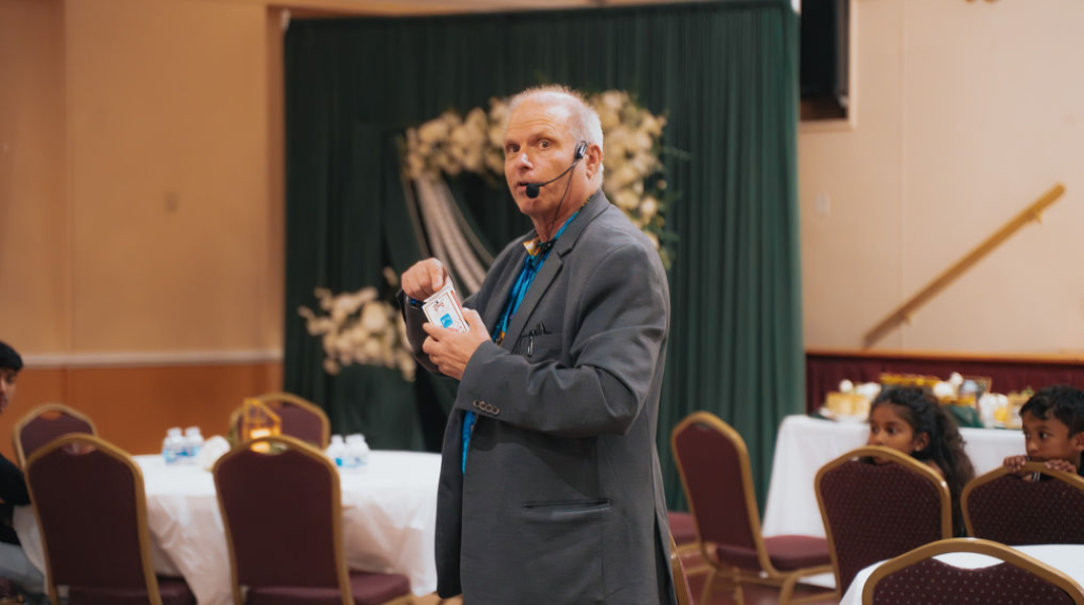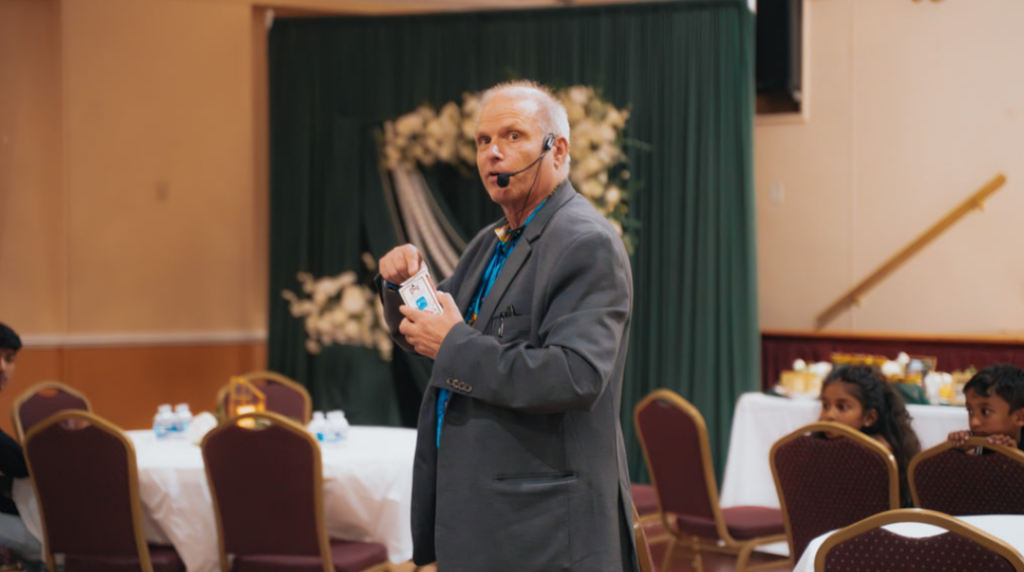
A magician is a magician, right?
Not necessarily.
Someone planning a company holiday party, client dinner, awards banquet, or networking reception may assume that any talented magician can handle the event. After all, the performer knows magic, the guests want to be entertained, and the basic goal seems straightforward.
But performing at a corporate event requires more than knowing impressive tricks.
The biggest difference between a general party magician and a corporate magician is not necessarily the magic itself. It is the performer’s understanding of the audience, environment, schedule, expectations, and business context surrounding the performance.
A successful corporate entertainer must know how to fit into a professional event without making it feel stiff, childish, awkward, or disconnected from the rest of the evening.
What Is a Party Magician?
“Party magician” is a broad term.
It may describe someone who performs at:
- Birthday parties
- Family celebrations
- Backyard gatherings
- Anniversaries
- Community events
- Children’s parties
- Adult private parties
- Holiday gatherings
- Graduation parties
Some party magicians specialize in children’s entertainment. Others focus on adults, close-up magic, comedy, mentalism, or general-audience shows.
There is nothing inherently less professional about party magic. Many excellent performers work primarily at private events.
The issue is that private parties and corporate events often require different performance instincts.
At a private party, the atmosphere may be casual. The host may know every guest personally. The schedule may be flexible. The entertainment may revolve around a birthday celebrant, anniversary couple, graduate, or guest of honor.
At a corporate event, the performer may be working with employees, executives, clients, vendors, spouses, and people meeting for the first time. The event may also include speeches, awards, presentations, dinner service, networking, and strict venue timing.
That changes the job.
What Is a Corporate Magician?
A corporate magician is a performer who understands how to entertain adults within a professional or business environment.
That may include:
- Company holiday parties
- Employee appreciation events
- Client appreciation events
- Awards dinners
- Conferences
- Sales meetings
- Networking receptions
- Association events
- Trade-show hospitality
- Executive dinners
- Company retreats
- Product launches
- Corporate anniversaries
A corporate magician may perform close-up magic, strolling magic, mentalism, comedy magic, or a formal feature show.
What makes the performance “corporate” is not simply the venue or the person paying the invoice. It is the performer’s ability to understand the event’s professional context and work effectively within it.
The Magic May Be Similar, but the Presentation Is Different
A card can vanish at a birthday party, a wedding reception, or a corporate dinner.
A participant’s thought can be revealed at an adult private party or during a company awards banquet.
The underlying effect may be similar, but the framing, pacing, humor, volunteer management, and interaction should be appropriate for the audience.
At a corporate event, the performance should generally feel:
- Intelligent
- Polished
- Interactive
- Inclusive
- Professional
- Adaptable
- Appropriate for adults
It should not feel like a children’s show being presented to grown-ups.
That does not mean the entertainment needs to be serious. Corporate audiences want to laugh, react, participate, and have fun. But the fun needs to feel suited to the room.
Corporate Audiences Require Different Material
Adult corporate audiences usually respond well to material involving:
- Thought reading
- Predictions
- Psychological choices
- Sleight of hand
- Impossible coincidences
- Memory demonstrations
- Interactive mysteries
- Smart comedy
- Personalized reveals
The material should create strong reactions without relying on childish props, exaggerated character work, or jokes that make the audience uncomfortable.
Mentalism is especially effective for corporate audiences because it can feel sophisticated, conversational, and highly interactive.
Guests are not simply watching objects disappear. They are making choices, thinking of information, influencing outcomes, and becoming part of apparently impossible events.
Corporate Participation Must Feel Safe
Audience participation is one of the most important differences between casual party entertainment and corporate entertainment.
At a company event, the performer may invite an executive, employee, client, or guest onto the stage. That interaction needs to be handled carefully.
A corporate magician should know how to:
- Select volunteers appropriately
- Explain instructions clearly
- Avoid embarrassing participants
- Adjust to reserved personalities
- Keep executives from becoming the target of uncomfortable jokes
- Make participants look good
- Recognize when someone does not want attention
- Maintain control without becoming aggressive
The goal is not to make someone feel foolish for the sake of a laugh.
The best audience participation makes the volunteer feel like an important part of the experience. The guest should return to their seat feeling amazed, appreciated, and glad they participated.
Corporate Events Have More Stakeholders
At a private party, the main decision-maker may be the person hosting the event.
Corporate events often involve several people:
- An event planner
- An executive assistant
- Human resources
- Marketing
- Company leadership
- A venue coordinator
- A caterer
- An audiovisual team
- A conference producer
- A committee
Each may have different concerns.
The person booking the entertainment may care about reliability and budget. The venue may care about setup. Leadership may care about professionalism. Employees may simply want to enjoy the experience.
A corporate entertainer needs to communicate clearly with all relevant parties and understand how their performance affects the wider event.
Corporate Schedules Are Often More Complex
A backyard birthday party may have a flexible start time. A corporate event may have a detailed agenda.
The entertainment might need to fit between:
- Cocktail hour and dinner
- Dinner and awards
- A presentation and dessert
- Conference sessions
- Executive remarks
- Employee recognition
- Transportation departure times
- Venue closing requirements
Corporate schedules also change.
Dinner may run late. A speech may take longer than planned. Guests may arrive slowly. The awards presentation may finish early.
A corporate magician should be able to adapt without creating additional stress for the planner.
That may mean:
- Delaying the start of a feature show
- Shortening or extending strolling interactions
- Adjusting the show length slightly
- Moving from one part of the room to another
- Coordinating with banquet staff
- Changing the order of material
- Working around last-minute agenda changes
Flexibility is part of professionalism.
The Performer Must Understand Different Room Dynamics
Corporate events can happen almost anywhere:
- Hotel ballrooms
- Restaurants
- Office buildings
- Conference centers
- Private dining rooms
- Country clubs
- Warehouses
- Rooftop venues
- Outdoor patios
- Museums
- Trade-show floors
Each environment creates different challenges.
A good corporate performer should consider:
- Sightlines
- Background noise
- Lighting
- Microphone needs
- Stage height
- Seating arrangements
- Cocktail tables
- Food service
- Guest movement
- Competing activities
A strong show can struggle if guests cannot see, hear, or comfortably focus.
A corporate magician should identify these issues before the performance and recommend a format that fits the actual room.
Corporate Entertainment Often Has a Specific Job
At some private parties, entertainment is simply there to entertain.
At corporate events, entertainment may have a more strategic purpose.
The host may want to:
- Break the ice
- Improve networking
- Reward employees
- Impress clients
- Energize a slow reception
- Provide a transition between agenda segments
- Reinforce a company theme
- Celebrate an achievement
- Create shared conversation
- End the event with a memorable finale
Those objectives affect the best performance format.
For example, strolling magic may be ideal when the goal is to energize networking. A feature mentalism show may be better when the host wants everyone to share one major experience.
A corporate entertainer should understand what the entertainment is expected to accomplish.
Corporate Magic May Be Customized
A private party may include personalization involving the birthday celebrant or guest of honor.
Corporate customization can involve:
- Company names
- Event themes
- Products
- Leadership messages
- Awards
- Sales goals
- Conference themes
- Industry references
- Special announcements
- Employee recognition
Customization should be handled carefully.
Simply repeating the company name throughout the show does not necessarily make the performance feel personalized. Forced branding can quickly become awkward.
Effective customization is usually selective. A company theme may appear in a prediction, reveal, opening moment, or finale. The connection should feel natural rather than inserted into every routine.
Professional Communication Matters More
For corporate planners, the experience begins well before the performer enters the room.
A corporate magician should communicate clearly about:
- Availability
- Pricing
- Performance formats
- Contracts
- Payment
- Arrival time
- Setup
- Sound requirements
- Space requirements
- Venue access
- Insurance documentation, when necessary
- Schedule coordination
- Contact information
- Last-minute changes
Corporate clients need confidence that the performer will arrive prepared and deliver what was promised.
A talented magician who communicates poorly can create unnecessary concern for the planner.
Professional communication is part of the product.
The Appearance and Tone Should Fit the Event
A performer’s wardrobe, language, humor, and general presence should match the environment.
A formal awards banquet may call for a different presentation than a casual company picnic. A client dinner may need a more understated style than a large holiday celebration.
A corporate performer should be able to adjust without losing their personality.
The goal is not to blend into the wallpaper. The goal is to feel like the entertainer belongs at that particular event.
Corporate Magic Is Not Necessarily a Stage Show
Some people hear “corporate magician” and imagine a large theater production with elaborate scenery.
Corporate magic can be much more flexible.
Strolling Magic
The performer moves among small groups during a cocktail hour, reception, or networking event.
This creates personal interactions and helps energize the room without interrupting conversation.
Feature Show
The audience gathers for a focused magic or mentalism performance, often after dinner or as part of the main program.
This creates a shared experience for everyone.
Hybrid Entertainment
The performer provides strolling magic during the reception and later presents a shorter feature show or finale.
This gives guests both intimate and shared experiences.
Intimate Mentalism Experience
For an executive dinner or smaller group, the performer may present a conversational show designed specifically for a close, sophisticated setting.
The best format depends on the event—not on a rigid definition of corporate entertainment.
Can a Party Magician Also Be a Good Corporate Magician?
Absolutely.
Many versatile professionals perform successfully at private parties, weddings, corporate functions, community events, and other settings.
The important issue is not the label on the performer’s website.
The real questions are:
- Do they regularly entertain adults?
- Do they understand professional audiences?
- Can they communicate effectively with planners?
- Can they adapt to a corporate schedule?
- Is their material appropriate?
- Can they manage audience participation respectfully?
- Do they understand the room and event goals?
- Can they provide relevant reviews, photos, or video?
A performer does not need to work exclusively at corporate events. But they should demonstrate that they understand what makes corporate entertainment different.
Warning Signs When Hiring Corporate Entertainment
Be cautious when a performer:
- Uses children’s-show footage to market an adult corporate program
- Cannot clearly describe the difference between their adult and children’s material
- Does not ask about the event schedule
- Does not ask about the guest count or room layout
- Relies heavily on embarrassing volunteers
- Cannot explain setup requirements
- Has no examples of adult audience reactions
- Communicates inconsistently
- Offers one identical show for every type of audience
- Focuses entirely on tricks without discussing the event
The right corporate entertainer should be interested in the event, not just the booking.
Questions to Ask Before Booking
Before hiring a magician for a company event, ask:
- Do you regularly perform for adult and corporate audiences?
- What format would work best for our event?
- How do you handle audience participation?
- What type of material do you perform?
- What setup or sound do you require?
- How much space do you need?
- Can you work around dinner, speeches, or awards?
- Can the performance be customized?
- Do you have relevant video or reviews?
- What information do you need from us?
The answers should help you understand not only whether the performer is talented, but whether they are prepared for your specific environment.
Choosing the Right Magician for a Philadelphia-Area Corporate Event
A company event deserves entertainment that fits the audience and supports the event rather than competing with it.
Rick Deezie provides interactive magic and mentalism for corporate and adult audiences throughout Philadelphia, Montgomery County, Bucks County, the Main Line, and nearby communities.
Programs can be designed for:
- Company parties
- Networking receptions
- Client events
- Awards dinners
- Employee celebrations
- Executive gatherings
- Holiday events
- Conferences
- Corporate retreats
Available formats include strolling magic, interactive mentalism shows, and hybrid reception-and-show experiences.
The goal is to create entertainment that feels intelligent, polished, participatory, and appropriate for the room.
To discuss your event date, location, audience, and schedule, visit rickdeezie.com.